FundBank this week announced its acquisition of Trrue.io, a Layer-1 blockchain focused on sustainable investing.
The acquisition marks one of the first steps the company has taken to expand its products and services to meet the demand for banking for digital assets.
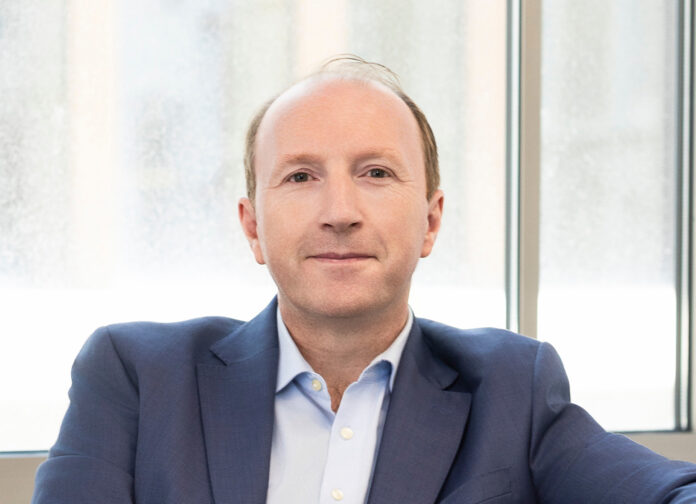
Read the interview with FundBank’s executive chairman and president Colm O’Driscoll on the company’s focus on digital assets in 2026.
Q: Why choose Trrue.io to start this expansion into digital assets?
FundBank selected Trrue as it combines innovative blockchain infrastructure with a strong focus on governance, compliance and institutional standards.
We had been watching the digital asset space closely for several years but had to be deliberate about timing. We were looking for an infrastructure and team capable of sitting at the intersection of regulated banking, real-world assets and digital rails. This is exactly what Trrue.io brings.
From day one, Trrue has taken a regulation-first approach. Their Layer-1 blockchain is purpose-built for compliant tokenisation and institutional-grade governance. Couple this with the fact they already operate as a registered Virtual Asset Service Provider and are actively pursuing a CASP licence under MiCA regulation, and they become a unique asset to our business.
That confidence is shared by others with deep roots in the industry. CoMop, the venture capital firm led by former Waystone Group CEO Derek Delaney (now a senior executive in FundBank), holds a 25% stake in Trrue.io and has elected to retain a stake in the business.
We see this as potentially as transformative for Ireland’s funds industry as AIFMD was for the creation of institutional management companies. We are amongst the earliest adopters of institutional Fiat and Custody infrastructure, and in time, we expect to round that offering out to a full Fiat, Custody and Trading capability.
Q: Why the focus on digital assets now?
We have long believed that digital assets and tokenisation would become part of the mainstream toolkit for asset managers, fund structures and family offices. The question for us was never “if”, it was always “when” we could participate in a way that meets the same regulatory, compliance and risk standards as our traditional business.
Now, the technology has matured, and institutional use-cases are well-established. The regulatory environment has also moved from experimentation into concrete frameworks, and clients are already allocating to digital strategies.
What the industry is lacking is reliable banking, custody and settlement services to support those allocations. For FundBank, entering the space now lets us meet that demand while positioning ourselves for the longer-term shift toward tokenised fund units, real-world assets and new forms of payment and settlement infrastructure.
Q: Why is compliance, transparency and trust so important as traditional financial players embrace digital assets?
Over the past decade we have seen what happens when crypto markets grow faster than governance. The consequences for investors, and for the broader credibility of the asset class have been significant.
Traditional finance is built on trust: that assets exist, that ownership is clear, that transactions are final, and that all of this sits within a robust legal and regulatory framework. Digital assets do not change that requirement. If anything, they raise the bar.
Our view is that digital assets will only be able to scale inside mainstream finance once the underlying infrastructure is as trustworthy as a fund’s constitutional documents or a custodian’s books and records.
As a regulated bank, our licence to operate depends on demonstrating compliance, clear audit trails and risk controls that supervisors and institutional clients can rely on. So we prioritise transparent, verifiable data and on-chain governance over speed.
Q: How has demand for banking for digital assets changed in recent years?
In the early days, demand came almost entirely from specialist crypto funds and exchanges. Essentially, narrow conversations focused on enabling a single strategy or venue. For us, that picture has changed considerably.
Today, many of our existing clients are launching dedicated digital asset vehicles alongside their traditional funds, or seeking structured, risk-managed exposure within diversified portfolios. Family offices have moved from ad-hoc allocations to formal mandates.
Across the board, clients are asking for the same things they expect in any other asset class: stable banking relationships, institutional-grade custody, robust KYC and AML infrastructure, and operational resilience across multiple jurisdictions.
We’ve identified a clear gap. Well-capitalised, regulated institutions with genuine banking capability are needed to provide core services. That is the space FundBank intends to fill.
Q: The acquisition has come soon after the industry gained regulatory clarity in the US and European markets – how has that regulatory framework contributed to the bank’s appetite to expand into digital assets?
Regulation has been the decisive factor. FundBank would not enter the digital asset space at scale until we could do so under credible, well-defined rules.
Recent developments in the US, such as the GENIUS and Clarity Acts, and recent OCC guidance on permissible bank activities has given institutions a much clearer view of what is permissible and how supervisors expect risks to be managed.
In Europe, MiCA and the national frameworks around crypto-asset service providers have moved from concept to enforceable practice.
This clarity does two things. First, it de-risks our own entry, because we can build controls and product design directly against published regulatory expectations. Andsecondly, it signals that our clients will be able to launch and distribute digital asset strategies in a way that is compatible with their own compliance obligations.
That combination made this the right moment to complete the Trrue.io acquisition, formalising our role as a bridge between traditional asset management and the digital asset economy.