
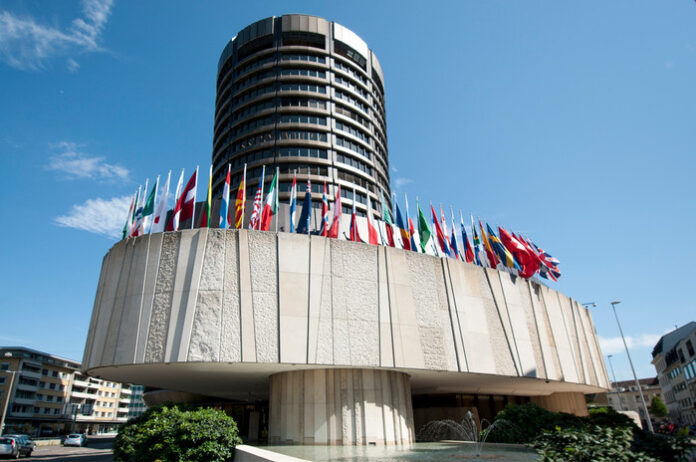
The Bank of International Settlement Innovation Hub has taken a decisive step in its multi‑year exploration of tokenised wholesale payments, confirming that Project Agorá’s prototype has successfully processed real‑value transactions across Asia, Europe and North America.
The controlled test environment saw 28 financial institutions and central banks settle around CHF 800,000 across 17 scenarios, validating the feasibility of atomic, multi‑currency settlement on a shared programmable platform.
Agorá is designed to address long‑standing frictions in cross‑border payments, where sequential processes, siloed liquidity and limited visibility continue to slow transactions and inflate costs.
By recording central bank reserves and commercial bank deposits as tokenised assets on a shared ledger, the prototype enables instant, simultaneous settlement while preserving the trust and regulatory foundations of the existing banking system.
The project brings together eight central banks — including issuers of five major reserve currencies — and more than 40 financial institutions convened by the Institute of International Finance.
Smart‑contract functionality allows institutions to embed workflow logic, compliance checks and conditional triggers directly into transactions, reducing reconciliation burdens and manual intervention.
Regulatory and legal considerations remain central to the next phase. The BIS is examining how tokenised reserves and deposits fit within existing frameworks governing settlement finality, AML/CFT and data privacy.
While Agorá is not intended as a finished product, participating central banks and private‑sector institutions have signalled strong interest in expanding testing, including further real‑value transactions and an enhanced role for private‑sector operators.
The BIS says continued testing will focus on operational, governance and legal dimensions as it evaluates whether a shared, programmable, multi‑currency platform could ultimately support safer, faster and more transparent wholesale cross‑border payments.
For further information, visit the BIS website.