
Banking and finance professionals are often criticised for being out of touch with the challenges their corporate clients face.
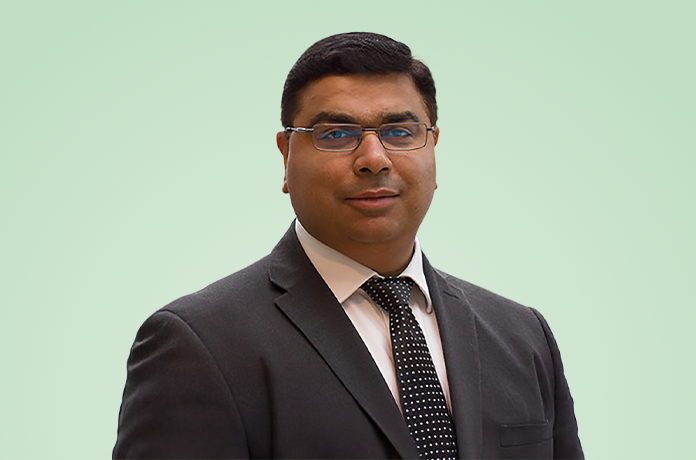
This cannot be levelled at Vibhor Narang, executive director in structured solutions for UK and Europe at Standard Chartered, who knows the importance of experience first-hand.
“I started my career selling washing machines and air conditioners—an interesting chapter – but after a year, I transitioned into banking, focusing on cross-border payments and forex,” he says.
After working first in his native India, he moved to London almost 20 years ago with ICICI Bank, before holding roles at JP Morgan and HSBC.
Today, Narang works in a team that leads Standard Chartered’s cash management agenda in Europe with product, sales and coverage partners. He also co-creates solutions with clients and leads treasury, cash and trade-linked FX and digital-related advisory efforts.
The team’s clients are large corporates around the world, many of which operate in the bank’s sweet spot of emerging markets. While based in London, Narang helps structure solutions in Africa, Singapore and beyond. Many of these corporate clients operate across a range of disparate jurisdictions, requiring efficient and cost-effective money movement.
“We focus on three key areas,” he says. “The first is structuring product propositions—knitting together various financial products to create customised solutions that optimise efficiency. The second is enhancing cross-border transactions, particularly for large corporations and development organisations moving money globally, addressing inefficiencies in traditional payment rails.”
The third is driving innovation in financial services, including stablecoins, blockchain-based payments and digital financial infrastructure. This third area is key to the transformation of financial and capital markets and promises to deliver a digital future for corporate clients that could unlock as yet unknown levels of growth in global trade.
Simplifying cross-border payments
It has been slow progress on cross-border payments since Narang was selling washing machines. It remains slow and fragmented, as different jurisdictions use domestic rails that refuse to communicate with one another. Regulatory misalignment, compliance requirements, and trade-related documentation introduce added complexity.
“Payments to higher-risk markets involve heightened scrutiny, leading to longer settlement times and higher costs,” he says. “Currently, transferring money to emerging markets can incur fees of 5–8% of the total transaction value—a significant expense for businesses handling large volumes.”
Enter: stablecoins, which he describes as a “game-changer in financial flows”.
“Stablecoins offer substantial benefits in cross-border transactions, particularly in unbanked regions, which make up a significant portion of Standard Chartered’s network,” he says.
“In remote corners of Africa and Asia, where financial infrastructure remains underdeveloped, stablecoins provide an alternative, enabling instant settlements and lower transaction costs.”
Yet, outside financial services circles, the term is almost unrecognised.
“Many businesses struggle to differentiate between terminologies including cryptocurrency, stablecoins, blockchain and distributed ledger technologies, leading to uncertainty in adoption,” says Narang. “Without proper understanding, companies either hesitate to integrate or risk using them irresponsibly.”
The bank understands the threat of clients adopting technology or instruments they don’t completely understand.
A misstep in this space for an investor might be unfortunate; a misstep for a large commercial client might mean total collapse. Handily, the bank has got ahead of the problem.
“Standard Chartered collaborates with development organisations and fintech firms that see strong demand for these solutions,” says Narang. “The stablecoin market, currently valued at $200bn, is expected to grow to $2.5–3trn by 2030, illustrating the rapid shift towards tokenised financial instruments.”
Evolution for non-financial corporations
As financial innovation has accelerated, barriers to entry have lowered, according to Narang. Regulators have adapted their approach, allowing fintechs and paytechs to expand their offerings while maintaining compliance standards.
“A decade ago, I conducted risk audits on fintech partnerships, flagging significant compliance concerns,” he says. “Today, those firms have evolved into trusted financial infrastructure providers, demonstrating long-term viability in the banking ecosystem. Many now hire risk and compliance professionals from traditional banks to build more robust frameworks.”
This means it is not just left to the banks – as the main relationship or contact point with corporates – to solve the trading headaches.
Yet, banks such as Standard Chartered play a crucial role in co-creation and collaboration, according to Narang, who notes that although fintechs enjoy venture funding, they often face trust challenges—especially with large corporates. Counterparty and technology risks are substantial barriers, limiting direct engagement with traditional finance.
“Our approach is to bridge that gap, leveraging our expertise to provide fintechs with credibility, security, and compliance support while benefiting from their agility and innovation,” he says.
It seems that other players are keen to take the same approach. Partior, a blockchain-based payment venture, attracted the investment and support from global banks and investment firms including Standard Chartered, JP Morgan, DBS and Temasek.
“The system now enables 24/7, risk-free, low-cost transactions, offering corporates enhanced liquidity management without requiring extensive implementation efforts,” explains Narang.
Regulatory frameworks: a global future?
Can such a solution be rolled out worldwide? Not necessarily, but that doesn’t mean it’s not a target.
“Ideally, a unified global regulatory system would exist, but, at times, geopolitical complexities make it unlikely,” says Narang. “Instead, we are witnessing the emergence of regional financial consortiums.”
SEPA (Single Euro Payments Area) operates in Europe. Buna is a cross-border boarder payment system and owned by the Arab Monetary Fund. There are a series of payments initiatives aiming to link domestic payment rails in ASEAN and India’s unified payments interface (UPI) integrates with Singapore’s (PayNow).
Alongside these regional networks, closed-loop banking ecosystems — such as Partior — are becoming increasingly interconnected, allowing institutions to transfer value securely with reduced friction and cost.
“The challenge ahead is establishing greater connectivity between these local or regional systems, harmonising compliance measures to streamline financial flows,” says Narang.
“Encouragingly, frameworks such as ISO 20022 are set to bring a tectonic shift in cross-border payments, enhancing data sharing capabilities and improving regulatory oversight across financial jurisdictions.”
Keep on investing in a global, commercial future
The danger, of course, is that events overtake progress, as, historically, banks have cut back on technology investments during economic downturns.
However, Narang believes this is no longer the case, and sees banks keen to innovate to support the activities of their commercial and corporate clients around the world.
“Today, financial institutions recognise that digital transformation is essential for long-term growth,” he says. “Many new investments are designed to be resilient to economic cycles, ensuring continuous advancements in financial technology.”
For Narang, financial digitisation and AI-driven solutions will continue to reshape banking infrastructure.
“It will optimise processes, reduce costs, and enhance customer experiences,” he says. “Innovation is no longer an optional investment—it is a strategic imperative for businesses looking to stay competitive in an increasingly digital financial world.”