
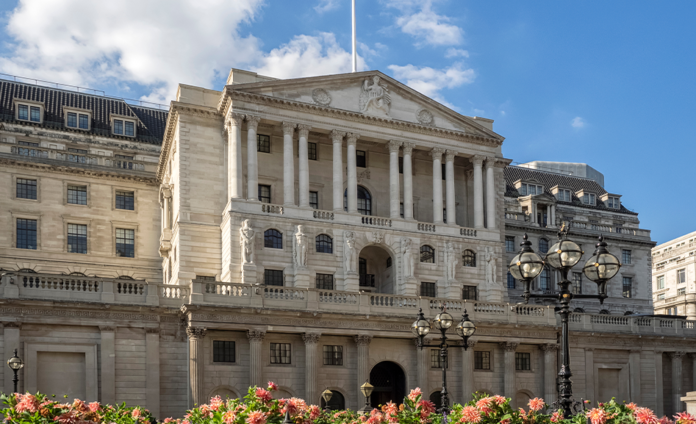
The Bank of England has published its policy statement and draft Code of Practice (rules) for systemic stablecoin issuers, softening the rules following industry backlash.
The policy statement and draft rules reflect the feedback from the previous consultation, providing coin issuers with clarity to innovate and scale within a framework that maintains resilience, confidence and trust in money.
The new proposals include changes to the rules on backing assets. The maximum share held in interest‑bearing assets (short-term UK government debt) has been increased from 60% to 70%, with the remainder in central bank deposits.
The Bank has also scrapped the temporary holding limits that were consulted on last year, instead offering a temporary issuance guardrail which will apply to each systemic stablecoin, initially set at £40 billion.
The guardrail will be reviewed regularly and removed once risks to credit provision have been addressed.
Sarah Breeden, deputy governor for financial stability, said: “This is a major milestone in delivering greater choice and innovation in UK payments. Innovation thrives on trust. And today we’ve set out the foundations of that trust for a new form of money – with prompt redemption, strong protections and central bank support. This is truly a world-leading regime.”
The new proposals are now subject to feedback, which must be provided by 22 September 2026. Following this, the Bank intends to finalise the Code of Practice by the end of 2026 and allow regulated stablecoins to operate in the UK from 2027.
Despite these updates, some market experts claim this approach remains too cautious. Janine Hirt, CEO of Innovate Finance, said: “Widespread adoption of stablecoins in financial markets is critical to maintaining the competitiveness of UK wholesale financial markets, and in the wider economy this can enable significant cost savings and productivity gains for businesses and families. The ability of the UK to benefit from these and to attract investment will be hampered by the Bank of England’s approach, which is more cautious than not only the US, Singapore and UAE but also the EU and Canada.
“Specifically, the requirement for 30% of backing assets to be held at the Bank of England with no remuneration removes a third of the potential revenue for service providers and issuers. This means that firms in the UK would have to develop entirely different business models compared to the rest of the world. The UK will be the only country in the world that requires a significant proportion of assets to be held in deposits that earn no return.”
Hirt praised the Bank for responding to some criticism from last year’s consultation, including the temporary holding limits, but noted the new limit on supply could hold back Britain’s plans for tokenisation of wholesale capital markets, which will potentially see significant trading volumes, and could create instability in the market if demand exceeds supply.
She added: “These proposals do little to address significant concerns raised by the House of Lords Financial Services Regulation Committee in its report on stablecoins last month.
“The Bank’s approach to stablecoins continues to be based on a narrow and cautious view of risk. The danger is that this significantly increases the risk of dollarisation of the economy, a failure to maintain the City’s leading capital markets, and a missed opportunity to improve Britain’s productivity record.”