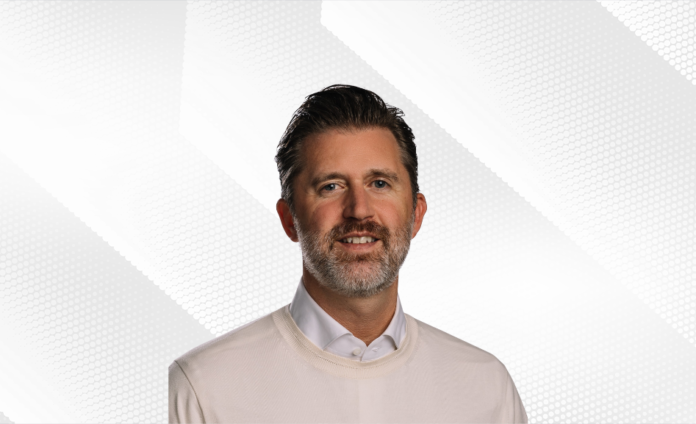
Institutional interest in digital assets has never been higher, but according to Luke Dorney, Head of Custody at LMAX Group, the conversation has fundamentally changed.
Six years ago, discussions centred on education, blockchain technology and helping financial institutions understand the basics of digital assets. Today, the focus has shifted towards implementation, infrastructure and real-world use cases.
Ahead of speaking at the Capital Pioneer Digital Assets Summit 2026, Dorney sat down with Capital Pioneer to discuss the evolution of institutional adoption, the role of custody and why market infrastructure will be critical to the next phase of growth.
From education to implementation
Having spent much of his career working within investment banks across custody, securities lending and prime brokerage, Dorney entered the digital assets sector at a time when institutional adoption was still in its infancy.
“Six years ago, there weren’t many institutional digital asset businesses,” he explains.
“A lot of the conversations were focused on education and exploration. We were talking to institutions about what a blockchain was and what infrastructure was needed to safeguard assets.”
Since then, the market has matured significantly.
“The conversation has moved from education to implementation. Institutions understand the technology now. What they’re focused on is how they apply it, where the use cases are and how they integrate it into their existing infrastructure.”
According to Dorney, the rise of stablecoins and tokenised real-world assets has accelerated this shift.
“Institutions are now seeing practical applications that solve real business problems. That’s why we’ve seen adoption increase significantly over the last six to nine months.”
Custody as critical infrastructure
For Dorney, custody sits at the centre of the digital asset ecosystem.
When LMAX Digital launched in 2018, the business built its own custody infrastructure from day one, enabling clients to securely store and transfer assets while accessing the exchange.
However, as institutional participation grows, Dorney believes the industry is moving towards a more modular model.
“What we’re increasingly seeing is the separation of exchange and custody,” he says.
“Institutions don’t necessarily want one provider doing everything. They want segregation of duties, independent custodians and greater flexibility around how assets are stored and settled.”
At the same time, custody cannot operate in isolation.
“Every blockchain service ultimately relies on the ability to securely store and move assets. Custody has to be integrated into the wider infrastructure stack. It’s no longer just a standalone service.”
The challenge of interoperability
While progress has been significant, Dorney believes one of the industry’s biggest challenges remains interoperability.
“No two custodians are the same. No two exchanges are the same. No two stablecoin providers are the same,” he says.
“Traditional financial markets benefit from decades of standardisation. Digital assets don’t yet have that.”
As a result, many firms are currently building solutions in isolation.
“What we’re trying to do is create infrastructure that feels much more like traditional post-trade markets. But long term, the industry needs greater interoperability and standardisation if we’re going to scale institutional adoption.”
Bringing traditional market structure into digital assets
One of the biggest hurdles facing institutional adoption, according to Dorney, is the structure of digital asset markets themselves.
In traditional financial markets, responsibilities are distributed across exchanges, central counterparties, custodians and settlement providers. In digital assets, many of these functions remain concentrated within a smaller number of participants.
“Traditional markets have clear separation of duties and risk transfer mechanisms,” he explains.
“To attract the next wave of institutional participants, digital asset markets need to evolve towards a similar model where responsibilities and risks are appropriately distributed across the ecosystem.”
This, he believes, will create a framework that is more familiar to risk, compliance and operations teams across financial institutions.
The convergence of traditional and digital markets
While challenges remain, Dorney is optimistic about the direction of travel.
One area he is particularly excited about is the convergence of traditional financial services and digital assets.
At LMAX Group, which operates across FX, CFDs and digital assets, the business is increasingly seeing traditional clients explore digital asset infrastructure as part of their broader trading and treasury operations.
“Stablecoins are becoming a bridge between traditional finance and digital assets,” he says.
“The ability to move value 24/7, transfer collateral more efficiently and create greater operational flexibility is generating significant interest from our traditional client base.”
According to Dorney, clients are already exploring how stablecoins and tokenised assets can be integrated into existing trading and collateral workflows.
“We’re seeing traditional financial institutions move beyond experimentation and begin looking at how these technologies can support existing products and services.”
Leading market evolution
Alongside technology development, Dorney believes education remains essential, although the nature of that education has changed.
“We’re no longer explaining what blockchain is,” he says.
“Today, we’re talking about real use cases, live infrastructure and practical opportunities that institutions can access right now.”
This focus on implementation extends beyond education into market structure itself.
Dorney points to recent developments such as Standard Chartered becoming a prime broker on LMAX Digital as examples of how traditional financial institutions are becoming increasingly integrated into digital asset markets.
“Changing market infrastructure is critical,” he says.
“The more institutions see familiar market structures emerging, the easier it becomes for them to understand, assess and participate in the opportunity.”
Looking ahead
As institutional adoption accelerates, Dorney believes the industry’s success will depend less on technology alone and more on the infrastructure that supports it.
“The technology exists,” he concludes.
“The next phase is about creating the market infrastructure, interoperability and institutional frameworks needed to support long-term growth.”
For firms across digital assets and traditional finance alike, that evolution may ultimately prove to be the catalyst that brings the two worlds together.
Luke Dorney, Head of Custody at LMAX Group, will be speaking at the Capital Pioneer Digital Assets Summit 2026.