
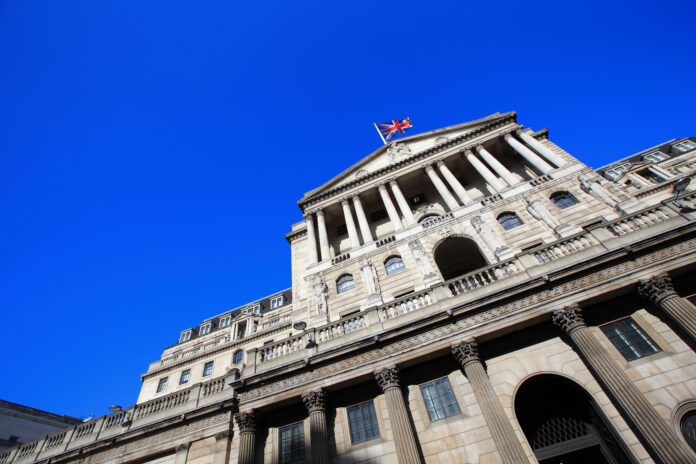
The UK’s top financial regulators – the Bank of England (BoE) and Financial Conduct Authority (FCA) – are working to finalise a regulatory regime for stablecoins before the end of the year.
Speaking at the Tokenisation Summit in London on Thursday, Sasha Mills, Executive Director of Financial Market Infrastructure at the BoE, set out the regulators’ three priorities in the digital asset space for 2026.
“We’re operating at a time where the financial landscape is evolving at speed, with technological developments bringing huge opportunities but also resulting in an ever-evolving threat landscape,” Mills said.
She compared the BoE’s role to that of an air traffic controller, adding: “Air traffic controllers don’t close the skies to new aircrafts or new ways of doing things; they create designated corridors and temporary clearances so novel aircraft can test routes and innovate systems, without endangering others.”
Priority 1: Stablecoins
Mills noted that the BoE’s remit extends only to systemic stablecoins, meaning those widely used for payments in the UK, which will be jointly regulated with the FCA.
“Systemic stablecoins need to meet the same standards as existing forms of money used in the UK real economy,” she said.
The regulators are currently consulting on several systemic stablecoin proposals, such as that these currencies could be provided with a deposit account at the BoE, as well as a liquidity facility that could provide a backstop for issuers.
Mills said the regulators “aim to finalise the regime for systemic stablecoins by the end of this year.”
Priority 2: Tokenised collateral
The BoE is open to expanding the range of tokenised assets that could be used as collateral in the UK, and will set out further policy in this regard later this year, Mills said.
She hinted at a principles-based approach, saying that the BoE “aims to avoid mandating or prohibiting specific technologies”.
“Where traditional assets are tokenised and provided the risks of the overall tokenisation arrangement are appropriately mitigated, we don’t expect the types of risks from holding tokenised assets to differ [from legacy finance] in any material way,” Mills said.
She invited firms to bring forward to the regulators “proposals that responsibly support safe and efficient adoption of tokenised collateral, including how they would plan to manage the associated risks”.
“Tokenised collateral will need to meet certain standards to support financial stability, … [including] ensuring both the underlying structure of the tokenised asset and the infrastructures supporting it are resilient,” Mills added.
The BoE will continue engaging with its counterparts in other regions, acknowledging that international consistency will be required to unlock the full benefits of cross-border tokenised collateral.
Priority 3: The Digital Securities Sandbox
The final area of regulatory focus is the UK’s Digital Securities Sandbox (DSS), the regulators’ live test environment that lets firms explore how certain new technologies work and could be used. Mills said the regulators were taking a “learn as we go” approach to the DSS, adapting it as institutions test various business models in the environment.
This includes “working at speed” with the FCA and Treasury to expand the DSS to include stablecoins as a settlement asset. The regulators are developing an assessment framework to identify those stablecoins that “meet high enough standards for use in the sandbox”, Mills said.
“For example, we will set out criteria around the quality and composition of backing assets, ability to meet redemptions and capital requirements, among other things,” she explained.
However, Mills noted these DSS requirements may not be copied and pasted onto the final regulatory regime. “As regulatory regimes for stablecoin issuers in the UK and internationally are still being developed, this assessment framework may not map exactly to future standards for what may be permitted in wholesale markets,” she said.