
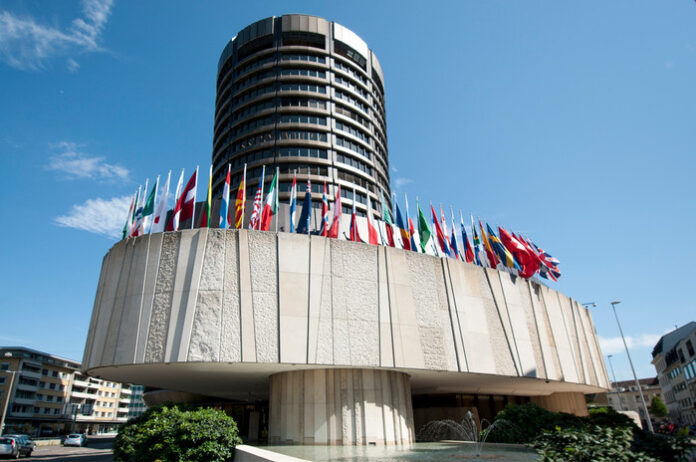
The Bank for International Settlements has warned that stablecoins are forming a de facto shadow dollar‑funding channel, linking retail users in emerging markets directly to US money markets through the reserve portfolios of major issuers.
In a new working paper, BIS economists say stablecoins now act as a parallel mechanism for accessing dollar liquidity, operating outside the banking system and beyond the scope of traditional capital‑flow management tools. The authors find that stablecoin inflows into emerging markets behave like classic flight‑to‑quality flows, rising sharply during banking or sovereign stress and mirroring the dynamics seen in offshore dollar markets.
The study highlights a two‑way structure: retail users in emerging markets buy USD‑denominated stablecoins as a store of value, while issuers invest the backing assets — predominantly US Treasuries — into short‑term dollar markets. The result is a pipeline that pulls money out of domestic financial systems and recycles it into US public‑sector debt, effectively positioning stablecoin issuers as non‑bank intermediaries in global dollar liquidity.
BIS notes that this channel is largely immune to FX and capital‑flow restrictions, which have historically curbed deposit dollarisation but show little impact on stablecoin usage. The paper argues that the persistence of dollarisation, combined with the regulatory gap around stablecoins, could reshape liquidity conditions and pricing benchmarks in affected markets.
The findings add to growing concerns among policymakers that stablecoins may amplify dollarisation pressures and weaken monetary sovereignty in jurisdictions already sensitive to external shocks. The BIS says the rise of stablecoins requires a reassessment of macro‑financial stability frameworks, given their ability to move retail money across borders without touching regulated intermediaries.
The full paper can be found on the BIS website.