Traditional financial institutions need to move beyond viewing digital assets primarily as cryptocurrency and towards integrating on-chain assets into their existing infrastructure.
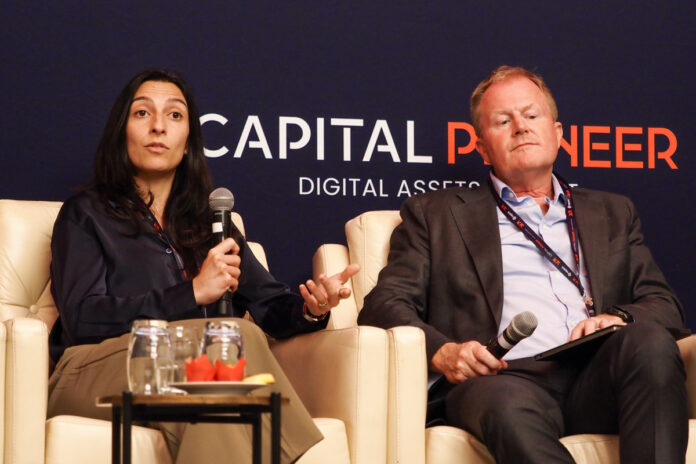
The panel focused on how digital assets can become part of existing banking infrastructure, with speakers arguing that digital and traditional systems will increasingly need to work together rather than one simply replacing the other.
Anoosh Arevshatian, chief product officer at Zodia Custody, said demand for digital-asset capabilities is being driven by both defensive and offensive considerations, as institutions consider how their businesses could evolve over the next decade.
Greater integration could also help move the industry beyond thinking about digital assets solely through the lens of cryptocurrency and towards the broader movement of assets on-chain.
“At the end of the day, it should just be another rail. We shouldn’t need to prove the same thing again,” Arevshatian said.
However, she stressed that institutions still need scalable operating models capable of supporting sufficient liquidity while meeting the regulatory, legal and operational requirements surrounding digital assets.
This includes recognising that technical settlement does not necessarily equate to operational finality. Arevshatian noted that regulated custodians may still need to apply controls, such as quarantining incoming assets, before they can be made available to clients.
“We’re still very much at the beginning of this journey,” she added.
Giles Elliott, head of business development and strategic partnerships at TCS BaNCS, similarly argued against treating digital infrastructure as a wholesale replacement for existing systems.
“It’s really too simplistic to think that we’re all going to jump from one bus to another. We need these systems to coexist,” he said.
Elliott said integration will also need to deliver tangible benefits for issuers, including faster and more flexible issuance and greater transparency around underlying investors.
He added that the industry needs to reduce complexity for issuers, intermediaries and investors as digital and traditional infrastructure converge.
“We have to simplify that environment,” he said.
Both speakers argued that making digital assets a genuine part of core financial infrastructure will depend not only on technological capability, but on making the surrounding operating model work at scale.